
Arbain al-hadith

To embark upon the intricate tapestry of Shia teachings, one cannot overlook the significance of Arbain al-Hadith, a corpus that encapsulates profound wisdom and moral guidance. This body of teachings, rooted in the tradition of the Prophet Muhammad and his progeny, serves as a cornerstone for understanding the Shia perspective on ethics, spirituality, and jurisprudence. […]
Read More →

Dawma bt. Amr b. Wahab

In the rich tapestry of Shia Islam, every individual plays a pivotal role, contributing to the collective understanding of belief, practice, and ethical conduct. One such figure worthy of scholarly attention is Dawma bt. Amr b. Wahab. This article explores the multifaceted teachings associated with her life, her contributions to Shia thought, and the implications […]

Read More →

Dhu l-Hijja 8

Dhu l-Hijja, the twelfth month of the Islamic lunar calendar, carries immense significance within the Shia tradition, particularly focusing on the eighth day known as Dhu l-Hijja 8. This day marks a series of pivotal events and imbues believers with a unique spiritual perspective, promising a transformative journey of faith. The significance of this date […]

Read More →

Ibn Juhaym al-Hilli

Ibn Juhaym al-Hilli, a luminary of Shia Islamic thought, offers a prodigious exploration of theological and philosophical dimensions that may transform one’s understanding of faith and practice. Born in the 13th century in the city of Hillah, Iraq, his contribution to Islamic scholarship cannot be overstated. He possessed an acute proficiency in jurisprudence, theology, and […]

Read More →

Ibrahim Malik al-Ashtar

Within the intricate tapestry of Shia Islam, the teachings of Ibrahim Malik al-Ashtar stand as a radiant jewel, illuminating the path of righteousness and justice. As a companion of Imam Ali, al-Ashtar’s life and contributions embody the quintessence of loyalty, valor, and commitment to truth. The exploration of his legacy offers not merely historical insights […]

Read More →

Shaykh Tusi

In the annals of Shia Islam, few figures emerge with the intellectual gravitas and profound influence of Shaykh Tusi. His teachings encapsulate a nexus of theology, jurisprudence, and philosophy that has shaped Shia thought for centuries. How does one encapsulate the legacy of such a pivotal figure? Are his contributions merely historical footnotes, or do […]

Read More →

Rajab 4

Rajab, the seventh month of the Islamic calendar, holds significant import within the Shia Islamic tradition. As a time of reflection, devotion, and preparation for the spiritual journeys that follow, Rajab serves as a poignant reminder of the opportunities for personal and communal growth in faith. At the heart of Shia teachings lies a profound […]

Read More →

19 Muharram

In the Islamic calendar, Muharram stands as a month of profound significance, particularly for the Shia sect. The 19th day of Muharram marks a critical juncture in the historical and spiritual narrative surrounding the tragic events of Karbala. It is a day imbued with extensive layers of meaning, a reflection of sacrifice, resistance, and the […]

Read More →

Abu Dujana

Abu Dujana has long been a figure of intrigue within certain historical and religious narratives, particularly among Shia adherents. Delving into his legacy offers a glimpse of not only the reverence associated with his character but also the multifaceted teachings that have emerged from his life and actions. To fully explore this topic, one must […]

Read More →

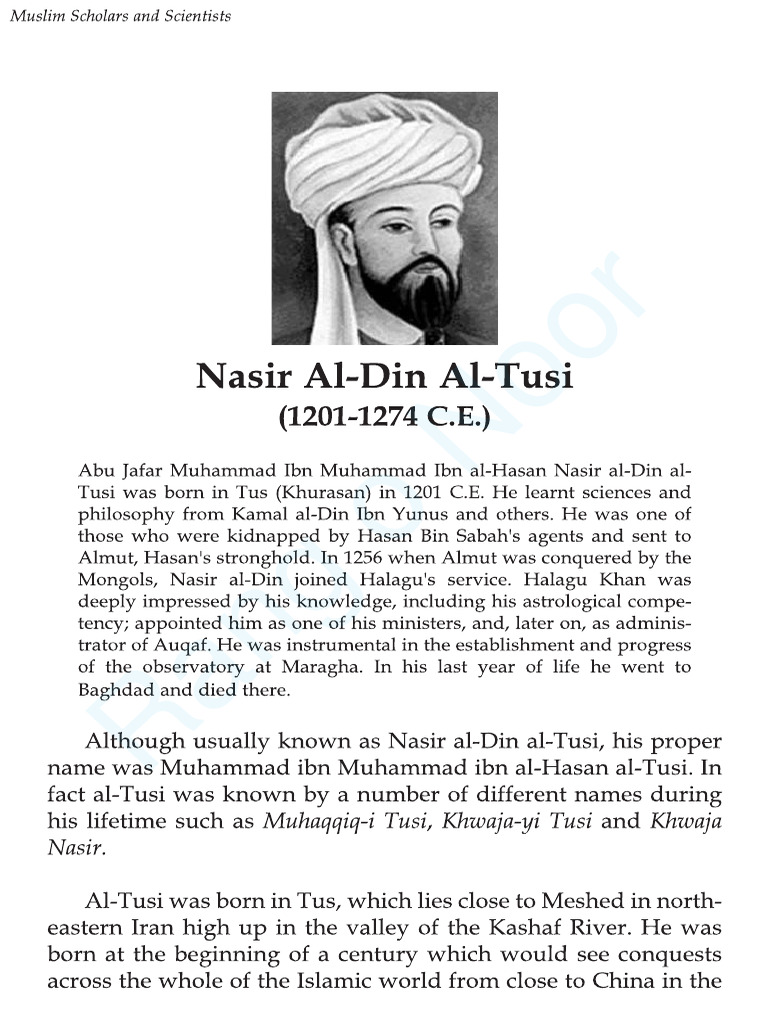
Nasir al-Din al-Tusi

In the rich tapestry of Islamic intellectual tradition, the eminent scholar Nasir al-Din al-Tusi emerges as a beacon of enlightenment, illuminating the paths of Shia teachings with his profound insights. His contributions traverse the chasms of theology, philosophy, and science, harmonizing disparate fields into a cohesive narrative that resonates with the essence of Shia thought. […]

Read More →