
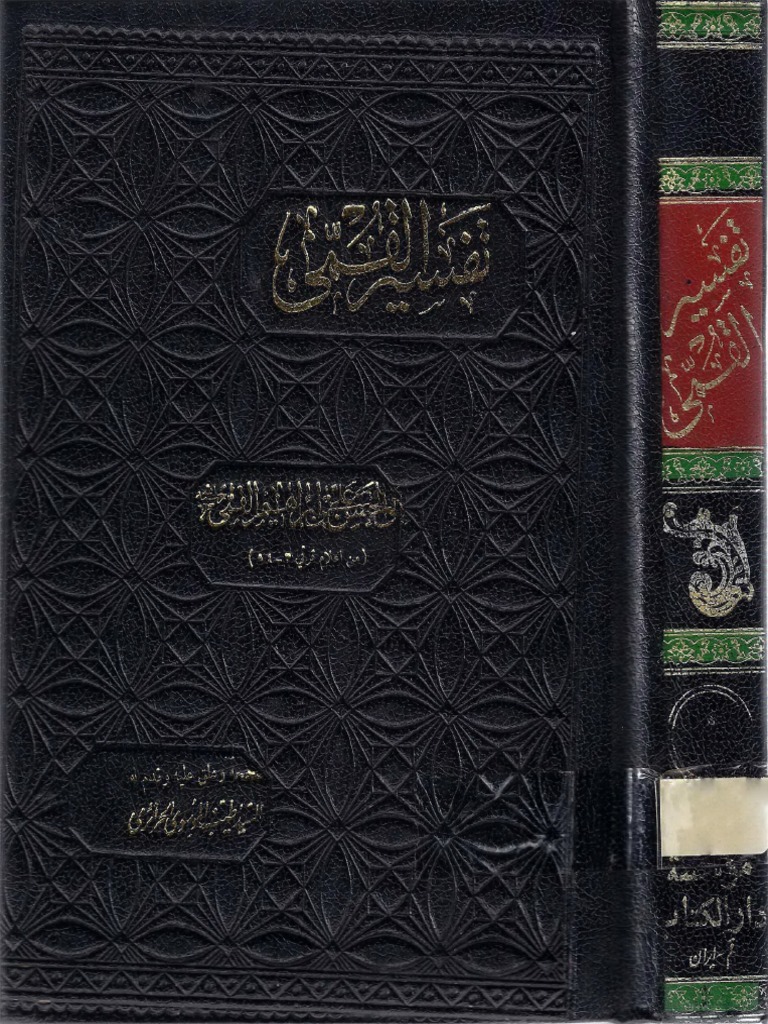
Tafsir al-Qummi (book)

Within the vast expanse of Islamic scholarship, Shia teachings present a unique and compelling interpretation of the Quran. Among the wealth of literature that enriches this tradition, “Tafsir al-Qummi” stands as a seminal work, providing profound insights into the Quranic text. The author of this celebrated tafsir, Ali ibn Ibrahim al-Qummi, produced this illustrious commentary […]

Read More →

Mahasin al-Barqi

Mahasin al-Barqi, or the “Good Traits of Barqi,” serves as an essential touchstone for understanding Shia teachings, particularly in the context of life’s different stages. The text delivers comprehensive reflections on the principles that govern a Shia Muslim’s life, from birth through death, emphasizing the ethical and moral frameworks that shape individual conduct. The allure […]

Read More →

Al-Tabaaki

Al-Tabaaki, a term that resonates deeply within the Shia Islamic tradition, encompasses both a nuanced understanding of communal ties and an interpretative framework for social conduct. Rooted in the teachings of the Ahl al-Bayt, or the “People of the House,” Al-Tabaaki invites adherents to reflect upon interpersonal relationships, communal harmony, and ethical considerations in the […]

Read More →

Yaseen Educational Foundation

The Shia tradition, rich in its historical, theological, and cultural tapestries, has meticulously cultivated spaces for educational enrichment, notably through institutions like the Yaseen Educational Foundation. What if, one might ponder, our understanding of faith could be enhanced through structured learning? This inquiry sets the stage for an exploration of the educational paradigms that the […]

Read More →

Al-Sayyid Hashim al-Bahrani

Within the vast tapestry of Shia Islam, the teachings of eminent scholars serve as both guiding lights and formidable pillars. Among such scholars, Al-Sayyid Hashim al-Bahrani stands out as an intellectual beacon who wielded a profound influence on Shia jurisprudence and theology. Born in the 18th century, al-Bahrani’s contributions have significantly impacted the Shia community’s […]

Read More →

Al-Qaim (a)

In the intricate tapestry of Shia Islam, the figure of Al-Qaim (a) holds a paramount position, embodying the principle of divine justice and salvation. Shia Muslims regard Al-Qaim as the awaited Mahdi, the twelfth Imam, whose reappearance is anticipated to restore equity and obliterate tyranny. This article delves deeply into the tenets surrounding Al-Qaim (a), […]

Read More →

Tahdhib al-ahkam

In the sprawling garden of Islamic scholarship, a hidden gem flourishes—the illustrious work known as “Tahdhib al-ahkam.” This monumental text, authored by the esteemed Shia scholar Sheikh Abu Ja’far Muhammad ibn al-Hasan al-Tusi, serves as a luminous beacon, illuminating the intricate pathways of Islamic jurisprudence. The book is often perceived as an authoritative compilation of […]

Read More →

Tafsir-i Nimuna (book)

The quest for understanding the divine text of the Qur’an has led scholars from various traditions to produce interpretations that provide insight into its multifaceted messages. Among these interpretations, “Tafsir-i Nimuna,” a significant Shia commentary, exemplifies the deep engagement with the Qur’an that characterizes Shia scholarship. This work not only serves as a profound explanatory […]

Read More →

Ali b. Musa (a)

In the vast tapestry of Islamic scholarship, the figure of Ali b. Musa, revered as Imam Raza, occupies a sanctified position within Shia teachings. His life and teachings encapsulate a confluence of spiritual insight, theological depth, and social equity that resonate deeply within the fabric of Shia Islam. To comprehend the allure surrounding Imam Raza […]

Read More →

Dua abu hamza thumali

Dua Abu Hamza Thumali stands as a luminary within the vast corpus of Shia Islamic supplications. This revered supplication, attributed to Abu Hamza Thumali, a companion of the fourth Shia Imam, Imam Zain ul-Abidin (peace be upon him), is both a conduit for spiritual reflection and a vehicle for penitential supplication. It exemplifies the profound […]

Read More →