
Short Answer
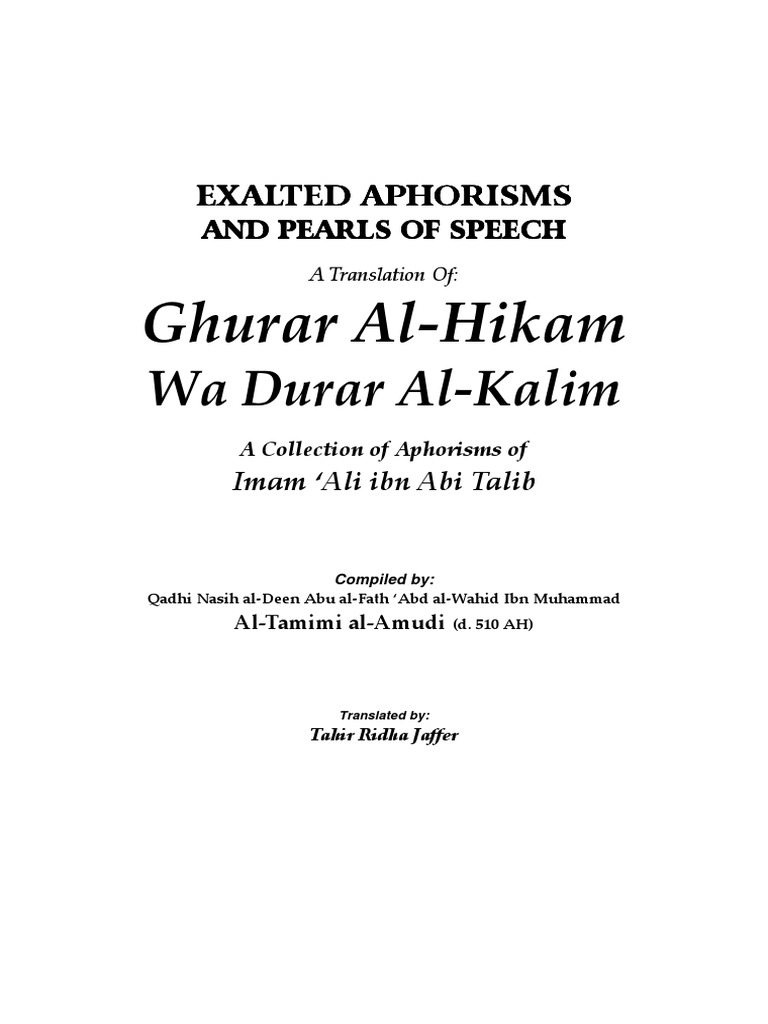
The teachings of Shia Islam encompass a vast and intricate tapestry of thought, deeply woven through both historical and contemporary discourse. Among the most esteemed texts within Shia literature is “Ghurar al-Hikam,” a compendium attributed to the teachings of the Imams, particularly the Ahl al-Bayt. This parchment resonates not only with religious sentiment but also embodies profound philosophical principles and ethical imperatives. This article endeavors to unravel the core themes of “Ghurar al-Hikam,” illuminating its impact on perspective and spiritual introspection.
One of the most compelling elements of “Ghurar al-Hikam” is its emphasis on the virtues of knowledge and wisdom. The text articulates, through succinct aphorisms, notions that challenge conventional views. In a world often overwhelmed by superficiality, the teachings implore adherents to delve deeper into their own consciousness and societal constructs. With phrases that echo through time, the text encourages seekers to cultivate knowledge as both a sacred duty and a pathway to understanding the divine. In the pursuit of wisdom, individuals are reminded of the necessity of discernment—a hallmark of Shia thought—enabling them to navigate the labyrinth of life with clarity and purpose.
Furthermore, “Ghurar al-Hikam” underscores the ethical dimensions of Islamic teachings. The importance of justice, compassion, and altruism resonates through its pages, presenting a holistic approach to human interaction. The text insists that true belief is manifested not merely through ritual observance, but through the embodiment of moral virtues. Such teachings illuminate the spiritual significance of ethical behavior, aligning daily conduct with divine expectations. This interplay between spirituality and morality raises pertinent queries about the nature of faith: Can one truly claim adherence to Shia Islam while neglecting the ethical obligations it prescribes? The text is both a mirror and a guide, compelling the reader to reflect on their personal moral compass.
The concept of justice is particularly pivotal in “Ghurar al-Hikam.” It advocates for equitable treatment in all human affairs, a pillar of both Shia and broader Islamic philosophy. Justice is not merely a societal construct; it is a divine imperative. This revelation invites individuals to ponder the implications of their actions and the cycle of retribution and justice that governs human interaction. The interspersing of theoretical and practical examples within the text serves to enhance understanding, prompting readers to contemplate how justice can be woven into the fabric of everyday life.
The text also surveys the complexity of human emotions, such as love, envy, and anger. Each emotion is presented not only as a natural aspect of the human experience but also as a trial that demands self-mastery. “Ghurar al-Hikam” speaks to the duality of human nature, delineating how these emotions can catalyze both spiritual elevation and moral degradation. The nuances of such feelings are explored, inviting readers to engage in self-reflection and to cultivate their emotional intelligence, thus aligning their inner lives with the aspirations of the Shia faith.
Moreover, the themes of patience and perseverance recur throughout the text, echoed in the teachings of the Imams. These virtues are quintessential in navigating the vicissitudes of existence. In a world that often prizes immediate gratification, “Ghurar al-Hikam” champions the strength found in resilience. This perspective on struggle correlates with a broader understanding of life as a test—a fundamental tenet of Shia belief. Each trial faced is perceived not as an obstacle but as an opportunity for growth and spiritual refinement.
Another pivotal teaching found within “Ghurar al-Hikam” pertains to the significance of community and collective identity. The text articulates that individual spirituality does not exist in isolation but is interwoven within the greater tapestry of the ummah (community). This recognition fosters a sense of solidarity and interconnectedness among believers, urging them to support one another in the pursuit of divine knowledge and justice. The moral responsibilities of individuals towards their community are woven throughout its teachings, creating a sense of urgency surrounding active engagement and advocacy.
Additionally, “Ghurar al-Hikam” invites readers to grapple with their perceptions of leadership and authority. The text challenges traditional hierarchies through the lens of ethical leadership—a key concept in Shia Islam. The qualities that define a rightful leader are discussed extensively, positioning morality, integrity, and wisdom as essential attributes. Such teachings prompt critical reflections on contemporary leadership models and their alignment with ethical directives, advocating for leaders who prioritize the collective welfare over personal ambition.
In conclusion, “Ghurar al-Hikam” serves as a transformative text within Shia thought, offering profound insights that bridge the gap between the sacrosanct and the secular. Its aphoristic style distills complex ideas into digestible wisdom, making it an accessible yet profound resource for seekers of knowledge. By engaging with its teachings, adherents can shift their perspectives, enriching their spiritual lives while navigating the complexities of modern existence. The text beckons readers to embark on an intellectual and spiritual journey, encouraging the pursuit of wisdom, ethical living, and a deepened commitment to justice—principles that resonate far beyond religious boundaries and into the core of what it means to be human.
FAQ
What is Ghurar al-Hikam?
Ghurar al-Hikam is a compendium of teachings attributed to the Imams in Shia Islam, emphasizing wisdom, ethics, and justice.
What themes are explored in Ghurar al-Hikam?
The text explores themes such as the virtues of knowledge, the importance of ethical behavior, justice, human emotions, patience, community identity, and ethical leadership.
Leave a Reply